O God, strength of those who hope in you, graciously hear our pleas, and, since without you mortal frailty can do nothing, grant us always the help of your grace, that in following your commands we may please you by our resolve and our deeds. Through our Lord Jesus Christ, your Son, who lives and reigns with you in the unity of the Holy Spirit, God, for ever and ever. Amen.
First ReadingEx 19:2-6a
On the third month after the Israelites had gone out of the land of Egypt they came to the wilderness of Sinai. 2 They had journeyed from Rephidim, entered the wilderness of Sinai, and camped in the wilderness; Israel camped there in front of the mountain. 3 Then Moses went up to God; the Lord called to him from the mountain, saying, “Thus you shall say to the house of Jacob, and tell the Israelites: 4 ‘You have seen what I did to the Egyptians, and how I bore you on eagles’ wings and brought you to myself. 5 Now therefore, if you obey my voice and keep my covenant, you shall be my treasured possession out of all the peoples. Indeed, the whole earth is mine, 6 but you shall be for me a priestly kingdom and a holy nation.’ “These are the words that you shall speak to the Israelites.”
Responsorial PsalmPs 100:1-2, 3, 5
R . We are his people: the sheep of his flock.
Second Reading Rom 5:6-11
While we were still weak, at the right time Christ died for the ungodly. 7 Indeed, rarely will anyone die for a righteous person. Though perhaps for a good person someone might actually dare to die. 8 But God proves his love for us in that while we still were sinners Christ died for us. 9 Much more surely then, now that we have been justified by his blood, will we be saved through him from the wrath of God. 10 For if while we were enemies, we were reconciled to God through the death of his Son, much more surely, having been reconciled, will we be saved by his life. 11 But more than that, we even boast in God through our Lord Jesus Christ, through whom we have now received reconciliation.
Gospel Acclamation
Gospel Mt 9:36—10:8
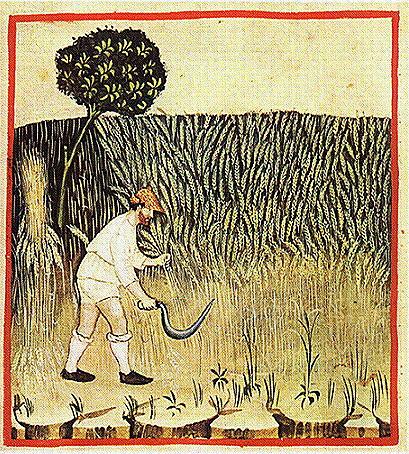
When Jesus saw the crowds, he had compassion for them, because they were harassed and helpless, like sheep without a shepherd. 37 Then he said to his disciples, “The harvest is plentiful, but the labourers are few; 38 therefore ask the Lord of the harvest to send out labourers into his harvest.” 1 Then Jesus summoned his twelve disciples and gave them authority over unclean spirits, to cast them out, and to cure every disease and every sickness. 2 These are the names of the twelve apostles: first, Simon, also known as Peter, and his brother Andrew; James son of Zebedee, and his brother John; 3 Philip and Bartholomew; Thomas and Matthew the tax collector; James son of Alphaeus, and Thaddaeus; 4 Simon the Zealot and Judas Iscariot, the one who betrayed him. 5 These twelve Jesus sent out with the following instructions: “Go nowhere among the Gentiles, and enter no town of the Samaritans, 6 but go rather to the lost sheep of the house of Israel. 7 As you go, proclaim the good news, ‘The kingdom of heaven has come near.’ 8 Cure the sick, raise the dead, cleanse the lepers, cast out demons. You received without payment; give without payment.”
Catena Nova
It was to save the disciples from the anxiety of such reasoning that the Lord called the gospel a harvest. It was almost as if he said: ‘Everything is ready, all is prepared. I am sending you to harvest the ripe grain. You will be able to sow and reap on the same day. You must be like the farmer who rejoices when he goes out to gather in his crops. He looks happy and is glad of heart. His hard work and many difficulties forgotten, he hurries out eagerly to reap their reward, hastening to collect his annual returns. Nothing stands in the way, there is no obstacle anywhere, nor any uncertainty regarding the future. There will be no heavy rain, no hail or drought, no devastating legions of locusts. And since the farmer at harvest time fears no such disasters, the reapers set to work dancing and leaping for joy. ‘You must be like them when you go out into the world – indeed your joy must be very much greater. You also are to gather in a harvest – a harvest easily reaped, a harvest already there waiting for you. You have only to speak, not to labour. Lend me your tongue, and you will see the ripe grain gathered into the royal granary.’ And with this he sent them out, saying: Remember that I am with you always, until the end of the world. (St John Chrysostom)
He needs you
That's all there is to it
Without you he's left hanging
Goes up in dachau's smoke
Is sugar and spice in the baker's hands
gets revalued in the next stock market crash
he's consumed and blown away
used up
without you.
Help him
that's what faith is
he can't bring it about
his kingdom
couldn't then couldn't later can't now
not at any rate without you
and that is his irresistible appeal. (Dorothee Soelle)
True compassion is more than flinging a coin to a beggar; it is not haphazard and superficial. It comes to see that an edifice that produces beggars needs restructuring. (Martin Luther King, Jr.)
Whenever I groan within myself and think how hard it is to keep writing about love in these times of tension and strife, which may at any moment become for us all a time of terror, I think to myself, "What else is the world interested in?" What else do we all want, each one of us, except to love and be loved, in our families, in our work, in all our relationships? God is love. Love casts out fear. Even the most ardent revolutionist, seeking to change the world, to overturn the tables of the money changers, is trying to make a world where it is easier for people to love, to stand in that relationship to each other. We want with all our hearts to love, to be loved. And not just in the family but to look upon all as our mothers, sisters, brothers, children. It is when we love the most intensely and most humanly that we can recognize how tepid is our love for others. The keenness and intensity of love brings with it suffering, of course, but joy too, because it is a foretaste of heaven. (Dorothy Day)
Once we have heard God's Word, we no longer have the right not to accept it; once we have accepted it, we no longer have the right not to let it become flesh in us; once it has become flesh in us, we no longer have the right to keep it for ourselves alone. Henceforward, we belong to all those who are waiting for the Word. … The incarnation of God's Word in us, this allowing ourselves to be molded by it, is what we call witnessing. To take the Word of God seriously, we need all the strength of the Holy Spirit. (Madeleine Delbrel)
So, let me now try to have a first go at telling the story of Christ in such a way as to give us an understanding of salvation which is purely gratuitous, without any element of retribution, and in which forgiveness is a divinely-initiated process lived out for us in our midst with a view to making us participants in something bigger than we are. I’m not going to try to tell the whole story, but just the central part, the crucifixion and resurrection, since it is they which enable us to advance in this conundrum. I take it that the resurrection is the making available to us of the crucifixion as the forgiveness of sins. In other words, it is a reaching into the hardest part of our hard-heartedness, where our involvement with death is most complete, in our tendency to hold on to life at the expense of victims, and think we are just to do so. By giving himself to that mechanism of ours, and there appears to be no human culture or society that we know of that is not dependent on it in some way, Jesus was allowing himself to lose to it. Now please note this. That what we have been taught so often to regard as a victory looked in fact for all the world like a defeat. It looked not as though Jesus conquered sin and death, but as though death, our human mechanism by which we are involved in death, conquered him. (James Alison)
Gospel preaching is born from gratuitousness, from wonder at salvation which comes; and what I have received freely I must give freely. This is evident when Jesus sends out his Apostles with instructions for their mission. “His orders are very simple, do not provide yourselves with gold, or silver, or copper in your belts...”. It was a mission of salvation that consisted in healing the sick, raising the dead, cleansing lepers and chasing out demons. It was to bring people close to the kingdom of God, to give them the good news that the kingdom of God is at hand, indeed is already here. The key sentence in Christ’s instructions to his disciples is: “you received without pay, give without pay”. These words contain the full gratuitousness of salvation, because: “we cannot preach or proclaim the kingdom of God, without this inner certainty that it is all freely given, it is all grace”. And if we act without leaving room for grace, “the Gospel has no effectiveness”. Moreover various episodes in the life of the first Apostles testify that Gospel preaching is born from what is given freely. St Peter, had no bank account and when he had to pay taxes, the Lord sent him to fish in the sea to find in the fish the money to pay them. When an apostle does not give freely he also loses the ability to praise the Lord, for “praising the Lord is essentially gratuitous. It is prayer freely prayed... We do not only ask, we praise”; but when disciples “want to make a rich Church, a Church without freely given praise, she “ages, she becomes an NGO, she is lifeless. (Pope Francis)
Homily
A friend of mine who plays pickle ball in my hometown mentioned someone he thought I might know. And I did. What he could not know, however, was the cascade of memories her name would trigger. I was immediately brought back to the summer of 1969 and a terrible tragedy that took place when her brother — about to enter high school — was electrocuted when he grabbed on to a light pole coming out of their backyard swimming pool. Though I did not tell my friend news of the tragedy reached my ears while I was in the hospital — receiving a five-pint blood transfusion after a blood vessel in my stomach had ruptured.
Now in the rest of the world,Neil Armstrong had just landed on the moon. Watching him come down the ladder made your heart pound. As he took that “small step for a man,” you could feel the “giant leap for mankind” surge within you. Technology’s power seemed boundless — like a thirteen-year-old’s energy should.
But the summer of '69 was also sandwiched between the assassinations of ‘68 and the campus violence of the 70s: Kennedy, King, and Kent State. A summer of triumph hemmed in by years of tragedy. When the blood of prophets, patriots, and protestors flowed. You felt helpless as you watched our national nightmare unfold. The moon landing and the Vietnam war were symbols of a nations’s strength, and its weakness. It was quite a backdrop for my own encounter with helplessness when I didn't have enough strength even to sit in a chair.
As theologian Karl Rahner once observed,
We human beings, one might say, by way of quasi-definition, are those strange creatures who perceive that they are finite and therefore unfree, who are prisoners of their finitude: unable to determine how long we shall live, unable to control the situation in which we find ourselves, prisoners of our limited knowledge, of the needs of our heart, of bodily sickness, of our environment, constantly exposed to death. Not only are we finite in all these ways; unlike other creatures, we know that we are finite and we feel ourselves oppressed and trapped by finitude.
Of course, we all face bodily weakness sooner or later. But also the helplessness we feel from circumstances we cannot control: the daily news of wars and rumors of wars, gun violence, political upheavals in the United States, the steady erosion of the environment, rumblings about another pandemic.
There's weakness of spirit too. That struggle to meet standards and expectations beyond our strength. Something like the Law of Moses was for the Israelites. When they camped in the Sinai desert God made a deal with them:If you hearken to my voice and keep my covenant, you shall be my special people, dearer to me than all other people(I). Trouble is, they never managed to keep their end of the bargain. The Law proved a burden beyond their strength.
Oh, we may, for the most part, meet the expectations we set for ourselves. But often enough there’s something to always gets the best of us. Maybe it’s a substance, maybe some behavior that wreaks havoc in our lives. Compulsion comes in many forms. Or maybe it’s some unchecked passion -unclean spiritsin their many forms. Things that make us feeltroubled and abandoned(G), things which that leave us feeling helpless.
But didn’t Paul just say Christ died for the ungodlywhile we were still helpless? (II) When we couldn’t hold our heads up, much less soaron eagle wings(I). Didn’t I hear him say we arejustified by his blood? (II) Not, then, by our works, or our striving, or our strength. But, yes, by his blood.
For we are powerless to please God by our own efforts. Boasting of our strength will not do. Nor will lamenting our weakness. Our strength comes from another. From someone who donated his blood for us to restore our strength, and save usby his life(II). Nor did we deserve any of it.It’s pure grace we receivewithout cost(G).
People in recovery know this very well. The first of twelve steps is admitting one's powerlessness and then reliance on a Higher Power which for Christians is the blood of Jesus. Which is why I think God allows us our weaknesses. Without them, troublesome though they be, we would forget the real Source of our strength: the transfusion we've received through Jesus’s blood.
That’s why I’m grateful for my own experiences of weakness beginning with that summer between seventh and eighth grade. When I needed someone else’s blood to live. It helped me later in life to acknowledge I was helpless over many things. And that righteousness is given by God, not earned. Given inour Lord Jesus Christ, through whom we have now received reconciliation.(II) Given in the cup we bless at the Eucharist. To God then, who gives food and drink, for body and spirit, whose Body and Blood does indeed renew our strength like the eagle’s, be glory now and forever. Amen.
Intercessions
For all who lead us in faith. May our leaders unite around Christ’s call to give hope to people in need so that mercy may become our bread.
For the disciples of Jesus, for the house of Israel, for the children of Islam, all of us dear to God: may goodwill and mutual respect grow among us.
For all people lost among the margins of life or who need the basics of life. May Christ give all peoples courage to serve each other unreservedly.
For unity among believers and hope among all who are silenced by oppression. May God bring unity and joy to our worshiping assemblies.
For all who labor to negotiate international covenants of peace: may God bless every effort to cast out the spirit of conflict. For all who face uncertainty and anxiety.
May we follow the example of Christ to heal the darkness and pain of daily life.
For all suffering incurable disease and illnesses that keep them isolated. May hope sustain our earthly bodies. May peace find a home in our vulnerable hearts.
For all who are sent out as missionaries in the Lords harvest: May they proclaim the good news in words of power and works of mercy.
For those engaged in medical research and scientific technology: may their discoveries lessen human suffering.
Compassionate God, your word calls labourers to the harvest. Send us who are blest with the gift of your kingdom to announce its coming with gladness and to manifest its healing power. We make our prayer through our Lord Jesus Christ, your Son, who lives and reigns with you in the unity of the Holy Spirit, God for ever and ever. Amen. (ICEL; 1998)
Offertory Chant
Offertory Hymn
O Jesus, I have promised to serve Thee to the end; Be Thou forever near me, my Master and my Friend; I shall not fear the battle if Thou art by my side, Nor wander from the pathway if Thou wilt be my Guide.
O let me feel Thee near me! The world is ever near; I see the sights that dazzle, the tempting sounds I hear; My foes are ever near me, around me and within; But Jesus, draw Thou nearer, and shield my soul from sin.
O let me hear Thee speaking in accents clear and still, Above the storms of passion, the murmurs of self will. O speak to reassure me, to hasten or control; O speak, and make me listen, Thou Guardian of my soul.
O Jesus, Thou hast promised to all who follow Thee That where Thou art in glory there shall Thy servant be. And Jesus, I have promised to serve Thee to the end; O give me grace to follow, my Master and my Friend.
O let me see Thy footprints, and in them plant mine own; My hope to follow duly is in Thy strength alone. O guide me, call me, draw me, uphold me to the end; And then in Heaven receive me, my Saviour and my Friend.
Communion Chant
Closing Hymn
Will you give me your life for ever?
Will you carry my cross ev'ry day?
Will you walk in the light of my presence?
Will you follow the truth of my ways.
Will you love me as I have loved you?
Will you live with me the darkness as I die?
For the moon and the stars will be gone like the night,